
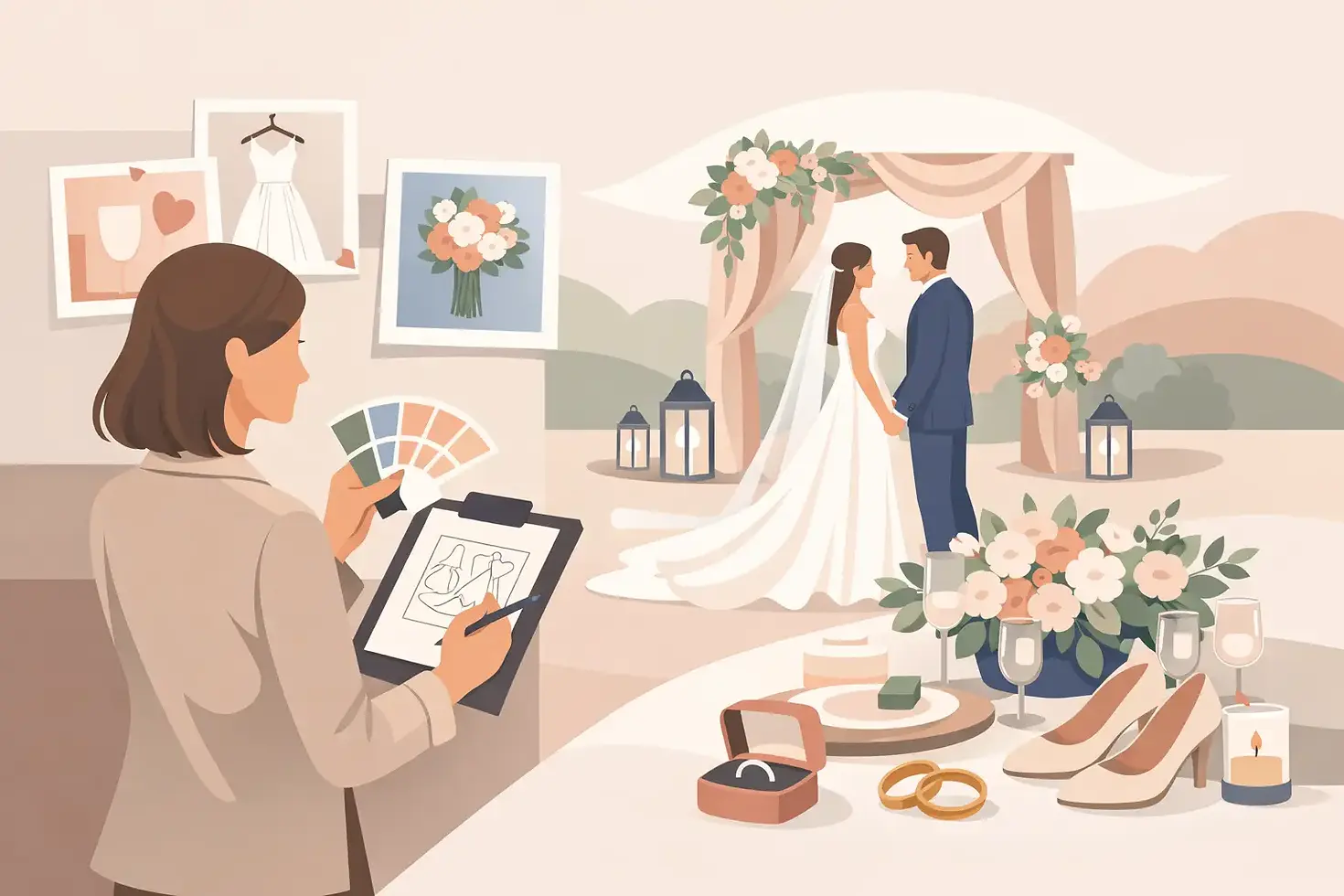
What Is Wedding Styling, Exactly?
You can usually spot the difference the moment you walk into a wedding. One feels beautiful, but a little pieced together. The other feels intentional from the first impression to the final candlelit table. If you’ve been asking what is wedding styling, the simplest answer is this: it’s the thoughtful design of how your wedding looks, feels, and comes together as a complete visual experience.
Wedding styling is about far more than choosing pretty decor. It brings together color, texture, florals, furniture, linens, candles, signage, table settings, and spatial layout so every element feels connected. Done well, it creates a celebration that feels like you, not a collection of separate vendor decisions.
What is wedding styling in practice?
In practice, wedding styling is the process of shaping the aesthetic direction of your day and carrying that vision through every visual touchpoint. That includes the ceremony backdrop, the reception tables, the entry moment, the bar styling, welcome signage, lounge areas, and all the smaller details guests may not consciously notice but absolutely feel.
A wedding stylist looks at the event as a whole. Rather than asking, “What flowers do you want?” or “Which candles should we hire?” they ask bigger questions. What atmosphere do you want guests to step into? Soft and romantic? Modern and editorial? Understated and intimate? Refined but relaxed? The answers guide every styling decision that follows.
This is why styling often becomes the thread that ties everything together. Without it, even high-end individual pieces can compete with one another. With it, the event feels cohesive, balanced, and beautifully considered.
Wedding styling is not the same as planning
This is where many couples get confused, and understandably so. There’s often overlap between wedding planning, floristry, coordination, and styling, but they are not the same service.
Wedding planning focuses on logistics, timelines, budgets, vendor management, and the overall organization of the event. Coordination is about making sure the day runs smoothly - suppliers arrive on time, the ceremony begins as planned, and the reception flows as it should.
Wedding styling focuses on the visual story. It is concerned with how the ceremony space is framed, how the reception room is layered, how textures work together, and whether the design feels consistent from start to finish.
That said, the most seamless weddings often happen when styling is considered alongside florals and coordination rather than in isolation. A beautiful concept is only as successful as its execution. If your stylist understands the practical flow of the day as well as the design, the result tends to feel calmer, more polished, and far less stressful for you.
What a wedding stylist actually does
A stylist’s role begins well before the wedding day. It usually starts with concept development. This is where your preferences, venue, season, guest experience, and budget are translated into a clear aesthetic direction.
That direction might include a curated color palette, floral style, recommended hire items, table design, ceremony structure, and layered decorative details that support the overall mood. It is not about adding more for the sake of it. Good styling is often about editing just as much as selecting.
From there, a stylist helps refine the visual decisions that can quickly become overwhelming. Which linen works with the chairs? Will a black candle holder feel too stark, or does it give the contrast the room needs? Should the ceremony flowers be repurposed into the reception, and if so, how will that still feel elevated? These are the kinds of choices that shape the final result.
On the day itself, styling includes setup and placement. This matters more than couples often realize. Even beautiful pieces can fall flat if they are not arranged with balance, proportion, and intention. Styling is what turns a box of hired items and florals into a finished environment.
Why wedding styling matters so much
A wedding doesn’t need to be extravagant to feel memorable, but it does need clarity. Styling gives your celebration that clarity.
It helps guests understand the tone of the day from the moment they arrive. A thoughtfully styled welcome area sets expectations. A well-composed ceremony space creates emotion before a word is spoken. A reception designed with warmth, softness, and depth encourages guests to settle in and enjoy themselves.
Styling also protects your investment. Couples often spend across multiple visual categories - flowers, stationery, candles, furniture, tableware, signage, and textiles. Without a cohesive plan, that budget can get diluted across choices that don’t quite support one another. Styling helps direct spending where it will have the most impact.
Just as importantly, it reduces decision fatigue. When you have a clear design framework, choices become easier. You are no longer selecting every item from scratch. You are making decisions that fit within a considered vision, which saves time and brings confidence.
What wedding styling includes and what it depends on
There is no single checklist that applies to every wedding, because styling should respond to the couple, the venue, and the kind of experience being created. For one wedding, styling may center on statement florals and a minimalist table design. For another, it may rely on layered linens, candlelight, sculptural vessels, and a carefully framed ceremony setting.
Most wedding styling involves a combination of ceremony design, reception design, floral direction, decorative hire selections, tablescape styling, and finishing details such as signage or feature moments. It can also include spatial planning from a visual perspective, especially in venues that need transformation.
The venue itself makes a difference. A modern blank-canvas space may need more styling to feel warm and complete. A heritage venue with strong architectural character may need a lighter touch. The goal is not to overpower the setting. It is to work with it so the entire event feels harmonious.
Budget plays a role too. Styling is not only for large weddings or luxury-scale installations. Even with a more contained budget, thoughtful styling can create a refined result. The key is prioritization. Sometimes that means investing in a few strong elements rather than trying to cover every corner.
Signs you would benefit from a wedding stylist
If you have a Pinterest board full of saved images but no idea how to turn them into one coherent look, styling will likely make the process much easier. The same is true if you know what you like emotionally - romantic, modern, softly luxurious, effortless - but struggle to translate that into actual design choices.
Couples also benefit from styling when they want their wedding to feel elevated without having to source, compare, and place every item themselves. This is especially true for busy professionals who want a beautiful result but do not have the time or headspace to manage all the moving parts.
You may also need a stylist if your venue is a blank canvas, if you are hiring decor from multiple places, or if you want florals, furniture, linens, and details to feel intentionally connected rather than separately arranged.
The value of an integrated approach
One of the biggest advantages of combining styling with florals and coordination is consistency. When one trusted team understands your vision, selects the visual elements, and handles the on-the-day setup, there is less room for mismatch, miscommunication, or last-minute compromise.
That integrated approach also creates a smoother experience for you. Instead of managing separate conversations about flowers, hire items, ceremony design, and setup logistics, you have one clear creative direction and one team responsible for carrying it through.
For couples who want the process to feel calm as well as beautiful, this matters. It means decisions are guided, details are thoughtfully handled, and the final result reflects both taste and structure. That is where wedding styling becomes more than decor selection. It becomes part of how the day feels to plan and to experience.
At Borrowed Events, that combination of styling, florals, and seamless execution is often what allows a wedding to feel fully resolved rather than simply well decorated.
So, what is wedding styling really about?
At its best, wedding styling is about creating visual cohesion with purpose. It shapes the atmosphere of your celebration, supports the guest experience, and turns ideas into an environment that feels personal, polished, and beautifully complete.
Not every wedding needs more stuff. Almost every wedding benefits from more intention. If you want your day to feel considered from every angle, wedding styling is often the piece that brings everything into focus.
When the design is thoughtfully handled, you are free to do what matters most - walk in, take a breath, and feel that it all looks exactly as it should.


Comments